TWO:News now came that the Brest fleet was putting to sea. On the 7th of May Lord Bridport went on board and ordered anchor to be weighed. Not a man stirred; nor was it likely. No sooner had Lord Bridport told them what was not true, that their demands were acceded to, than, in the House of Lords and the House of Commons, Ministers had spoken of the subject in very ambiguous terms, and the Board of Admiralty had only ended the ambiguity by issuing an order on the 1st of May, commanding, in consequence of "the disposition lately shown by the seamen of several of his Majesty's ships," that the arms and ammunition of the marines should be kept in readiness for use in harbour, as well as at sea; and that on the first appearance of mutiny the most vigorous measures should be taken to quell it. This was ordering the officers of marines to fire on the sailors who should refuse to be thus shamefully juggled out of their promised rights by the Government. On board the London, Vice-Admiral Colpoys pushed the matter so far that his men resisted orders; and as one was unlashing a gun, Simpson, the first-lieutenant, told him that if he did not desist he would shoot him. The man went on unlashing, and Simpson shot him dead! On this, the sailors, in a rage, disarmed the officers and proceeded to hang Simpson at the yard-arm. Colpoys then begged for the lieutenant's life, assuring them that the order was his own, and that Simpson had only done his duty in obeying it. The chaplain and surgeon joined in the entreaty; and the men, far more merciful and reasonable than their commanders, complied. They ordered, however, Colpoys and all the officers to their respective cabins, and put the marines, without arms, below deck. Similar scenes took place on the other ships, and the fleet remained in the hands of the sailors from the 7th to the 11th of May, when Lord Howe arrived with an Act of Parliament, granting all their demands. Howe, who was old and infirm, persuaded them to prepare a petition for a full pardon. They, however, accompanied this petition by an assurance that they would not serve again under the tyrannical officers whom they had put on shore; and this was conceded. Admiral Colpoys was included in this list of officers proscribed by their oppressed men, along with four captains, twenty-nine lieutenants, seventeen masters' mates, twenty-five midshipmen, five captains of marines, three lieutenants, four surgeons, and thirteen petty officers of marines. The whole being arranged on the 15th of May, the red flag was struck; and the deputies waited on Lord Howe to express their obligations to him for his kind services on behalf of the oppressed seamen. His lordship gave them luncheon, and then was escorted by them, along with Lady Howe, on board the fleet. On their return, they carried Lord Howe on their shoulders to the Governor's House. Sir Roger Curtis's squadron had just come in from a cruise, and on learning what had passed, declared themselves ready to support the rest of the fleet; but the news which Howe had brought at once satisfied them, and all eagerly prepared to set sail, and demonstrate their loyal zeal by an encounter with the Brest fleet.These great victories, so hardly won with such heavy sacrifices of human life, and accompanied by such heroic achievements, excited the admiration of the British public. The principal actors were munificently rewarded. The Governor-General was created Viscount Hardinge of Lahore, the title being accompanied by a shower of honours from his Sovereign, and a large pension from the East India Company. Sir Hugh Gough was also raised to the peerage, and received from the Company an annual pension of ¡ê2,000, with the same amount from Parliament, for three lives. Many of the officers engaged in the Sikh war received promotion and military orders, and a gratuity of twelve months' pay was given to all the soldiers without exception engaged in the campaign.
THREE:The Marquis Wellesley was sent over to Ireland by Lord Liverpool in order to govern Ireland upon this principle; and he might have succeeded better if he had not been checked by Mr. Goulburn, the Chief Secretary, distinguished by his hostility to Catholic Emancipation, who was appointed "viceroy over him." In a letter which the Marquis wrote to the Duke of Buckingham (June 14th, 1824) he refers to some of the difficulties with which he had to contend in carrying out an impartial policy between the extreme parties, which were then very violent. His labours, however, in enforcing respect for the law and effecting improvements were not altogether in vain. "The situation of Ireland," he writes, "although very unsatisfactory, is certainly much improved, and foundations of greater improvement have been firmly laid. The committees of Parliament have done much good; and, if vigorously and fairly pursued, may effect a permanent settlement of this distracted country. The present violent collision of the two ultra parties, or rather factions, Orange and Papist, is a crisis of the disorder which was necessary to their mutual dissolution, an event which I think is fast approaching, and which must be the preliminary of any settlement of peace."per cent.[2]
FORE:
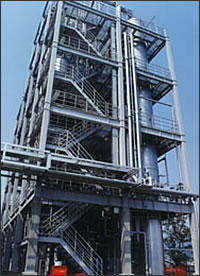
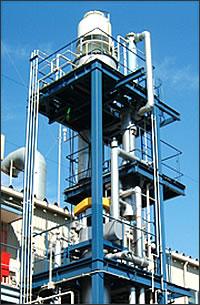
Methanol refinement systems, amyl alcohol refinement systems, ethanol refinement systems, hexanol distillation systems, propanol refinement systems, cyclohexanol distillation systems, isopropanol dehydration systems, ethylene glycol recovery systems, and butanol distillation systems.
FORE:
Hexane distillation systems, tall oil distillation systems, benzene distillation systems, lubricating oil refinement systems, xylene-free distillation systems, low-boiling gas distillation systems, ethylbenzene recovery systems, fusel oil distillation systems, naphthalene distillation systems, propylene recovery systems, and turpentine oil distillation systems.
FORE:Notwithstanding the constant wars of this time, British shipping, commerce, colonies, and manufactures made considerable progress. At the commencement of this period the amount of shipping employed in our commerce was altogether 244,788 tons, being 144,264 tons English, and 100,524 foreign; in 1701 the amount of shipping employed was 337,328 tons, of which alone 293,703 were English. In 1702, the end of William's reign, the number of English mercantile vessels was about 3,281, employing 27,196 seamen. The royal navy, at the end of William's reign, amounted to about 159,000 tons, employing some 50,000 sailors, so that the seamen of England must have amounted at that period to nearly 80,000.
Ether distillation systems, camphor distillation systems, epichlorohydrin distillation systems, aniline distillation systems, dioxane refinement systems, acetonitrile distillation systems, furfural refinement systems, formalin distillation systems, cyclohexane distillation systems, monoethanolamine rectification systems, polyglycol ether distillation systems, dimethylformamide recovery systems, acrylic glycol ether distillation systems, acrylonitrile refinement systems, acetone recovery systems, pyridine distillation systems, methyl ethyl ketone recovery systems, picoline distillation systems, methyl isobutyl ketone recovery systems, and acetaldehyde recovery systems.
